
Why Are Chrome Trim Pieces Turning White and Blistering? The Copper-Nickel-Chromium Triple Layer Has Been Destroyed — Don”t Rush for Automotive Polishing Wax
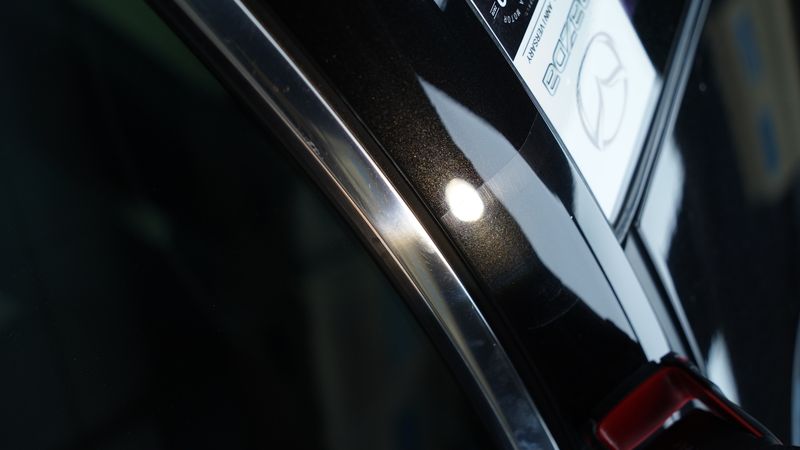 Chrome trim turning white may look like a surface problem, but in reality the triple-layer structure has already been corroded through
Last week a friend who runs a detailing shop sent me a photo — the chrome grille trim had large areas of whitening, with blisters bubbling up in several spots. He asked me, “Can I use your DianYe wax to polish it back?”
I told him straight up: Hold on. First figure out WHY it”s turning white and blistering, then decide how to treat it.
When most people see chrome trim turning white or blistering, their first instinct is to grab automotive polishing wax and start rubbing. If you”re lucky, you buff off the surface oxidation and it looks a bit shinier. If you”re unlucky, you grind right through the already-thin chromium layer, exposing the yellowish nickel underneath — which looks even worse than before.
Chrome trim corrosion isn”t as simple as “it went white, so buff it.” The root cause lies in the destruction of the chrome layer”s triple-layer structure. If you start working without understanding that structure, you”re basically guessing blindly. In this article, I”m going to break down the triple-layer structure of chrome trim, the corrosion mechanisms, and the real reasons behind whitening and blistering. Once you understand these, you”ll be able to judge whether the automotive polishing wax in your hand can actually help.
1. First, Understand This: Chrome Trim Isn”t Just One Layer of Chromium — It”s Three
You might think chrome trim is just a surface layer of chromium. It”s not. Decorative chrome trim on vehicles is a copper-nickel-chromium triple-layer electroplating system, with each layer serving a different purpose:
| Layer | Material | Typical Thickness | Function |
|---|---|---|---|
| Bottom layer | Copper plating | 6-8μm | Base layer, adhesion promoter, fills substrate defects |
| Middle layer | Nickel plating | 8-12μm | Core protective layer, provides corrosion resistance and mirror finish |
| Top layer | Chromium plating | 0.12-0.5μm | Wear-resistant, weather-resistant, provides the signature blue-white luster |
All three layers together typically total just over a dozen micrometers — thinner than a sheet of paper. The outermost chromium layer is only 0.12 to 0.5 micrometers — a human hair is roughly 70 micrometers in diameter, meaning the chromium layer is less than 1/70th the thickness of a single hair.
This number matters — you”ll see why repeatedly below.
There”s an even thinner variant: chrome plating on plastic substrates (ABS), such as emblems and interior door handles. Plastic parts require a chemical deposition of a 0.1-0.3μm conductive layer first, then the copper-nickel-chromium triple layer on top. Total plating is even thinner, corrosion resistance even weaker. These are far more prone to problems than metal-substrate pieces.
2. Why Does Chrome Trim Corrode? Three Mechanisms Working Simultaneously
Chrome trim turning white and blistering is fundamentally electrochemical corrosion. But it”s never caused by a single factor — it”s the combined effect of three mechanisms:
1. Micropore Penetration — The Chromium Layer Has Inherent “Vulnerabilities”
At the microscopic level, decorative chromium plating is never fully dense. It inherently contains numerous micropores and micro-cracks. These pores can be several micrometers in size at the micro scale, while the chromium layer itself is only 0.12-0.5μm thick — the micropore diameter can actually exceed the chromium layer thickness.
What does this mean? Moisture, oxygen, and corrosive ions pass straight through these micropores and reach the nickel layer below. Once nickel is exposed to corrosive media, it begins to oxidize. The oxidation products expand in volume, pushing the chromium layer upward from underneath — this is what you see as “blistering.”
2. Galvanic Corrosion — Chromium and Nickel “Destroy Each Other”
Chromium is more “noble” than nickel (more cathodic in electrochemical terms). When micropores allow corrosive media to penetrate through the chromium to the nickel, a chromium-nickel galvanic couple forms: nickel acts as the anode and corrodes preferentially, while chromium as the cathode is actually protected.
The corrosion products from nickel expand in volume, pushing the chromium layer up from inside, creating a chain reaction of blistering → cracking → peeling. Once blisters crack open, more corrosive media floods in, the affected area grows, and eventually entire sections of chromium peel off.
Modern multi-layer nickel systems (semi-bright nickel + bright nickel) control the potential difference between the two nickel layers to make corrosion spread laterally rather than penetrating vertically, delaying the appearance of visible rust. But this mechanism can only “delay” — it cannot “prevent.”
3. Passivation Layer Destruction — Chromium”s “Shield” Is Broken
Chromium spontaneously forms an extremely thin chromium oxide (Cr₂O₃) passivation layer when exposed to air — this is fundamentally why chromium doesn”t rust. But this layer isn”t invincible — acidic substances (acid rain, bird droppings) or strong alkaline cleaners can dissolve it. Once the passivation layer is gone, the chromium substrate is directly exposed to air, and oxidation speed multiplies.
The combined result of all three mechanisms: micropores let corrosive media in → galvanic corrosion causes the nickel layer to expand and blister → passivation layer destruction accelerates oxidation → whitening, blistering, and peeling progress step by step.
3. What in Daily Life Is Corroding Your Chrome Trim
Now that you understand the mechanism, let”s look at what specific culprits are causing the damage:
| Corrosion Source | How It Causes Damage | What You See |
|---|---|---|
| Acid rain | pH 3-4, directly dissolves chromium passivation layer | Surface fogging, white spots |
| Bird droppings | Contains phosphoric and uric acid, pH ~3-4, strong localized acid corrosion | Localized pitting, permanent damage |
| Iron particles | Deposit on surface forming galvanic couples, destroy interlayer bonding | Rust spot expansion, interlayer delamination |
| Road de-icing salt | Chloride ions penetrate micropores, accelerate electrochemical corrosion | Pitting, blistering |
| Improper cleaners | Strong acids (toilet cleaner, iron removers) or strong alkalis directly dissolve passivation layer | Large-area whitening, gloss loss |
| UV + high temperature | Degrades surface wax/sealant layer, rendering protection ineffective | Slow oxidation, gradual dulling |
That last one is often overlooked — the wax or sealant on your chrome trim has a finite lifespan. UV and heat gradually degrade it. Once the protective layer is gone, the chromium is directly exposed to air and moisture. Oxidation becomes just a matter of time.
4. Chrome Trim Location Matters — Corrosion Risk Varies Significantly
Not all chrome trim corrodes at the same rate. Location makes a dramatic difference:
High-risk areas:
- Horizontal chrome trim (roof rails, trunk trim): Water pooling + pollutant deposition = fastest oxidation
- Lower body chrome (side skirt trim, rocker panel trim): Most exposed to road salt spray and gravel impact
- Door handles/arm rests: Repeated contact + sweat salts wear away protective layer fastest
- Exhaust tips: High temperature + carbon deposits + acid-base cycling = extreme thermal cycling crack risk
- Grille/front fascia: Direct impact zone for gravel, insect remains, and chemical exposure
Special type:
- Plastic substrate chrome (emblems, interior door handles): Total plating is thinner, oxidizes far more easily than metal substrate. Many people notice their emblems whiten and blister much faster than body chrome strips — this is exactly why
So if your car is regularly parked under trees (bird droppings), near the ocean (salt spray), or close to chemical plants (industrial fallout), your chrome trim maintenance frequency needs to double.
5. Assessing Oxidation Severity: When Can Automotive Polishing Wax Help, and When It Can”t
This is the most critical part — when chrome trim oxidizes, can you use automotive polishing wax? It depends entirely on the oxidation level.
Light oxidation: Surface appears foggy or has grayish-white patterns, but still feels smooth to the touch. The passivation layer is damaged but the chromium hasn”t been penetrated. This is the scenario where automotive polishing wax can help — use a gentle product to remove the oxidation layer and restore gloss.
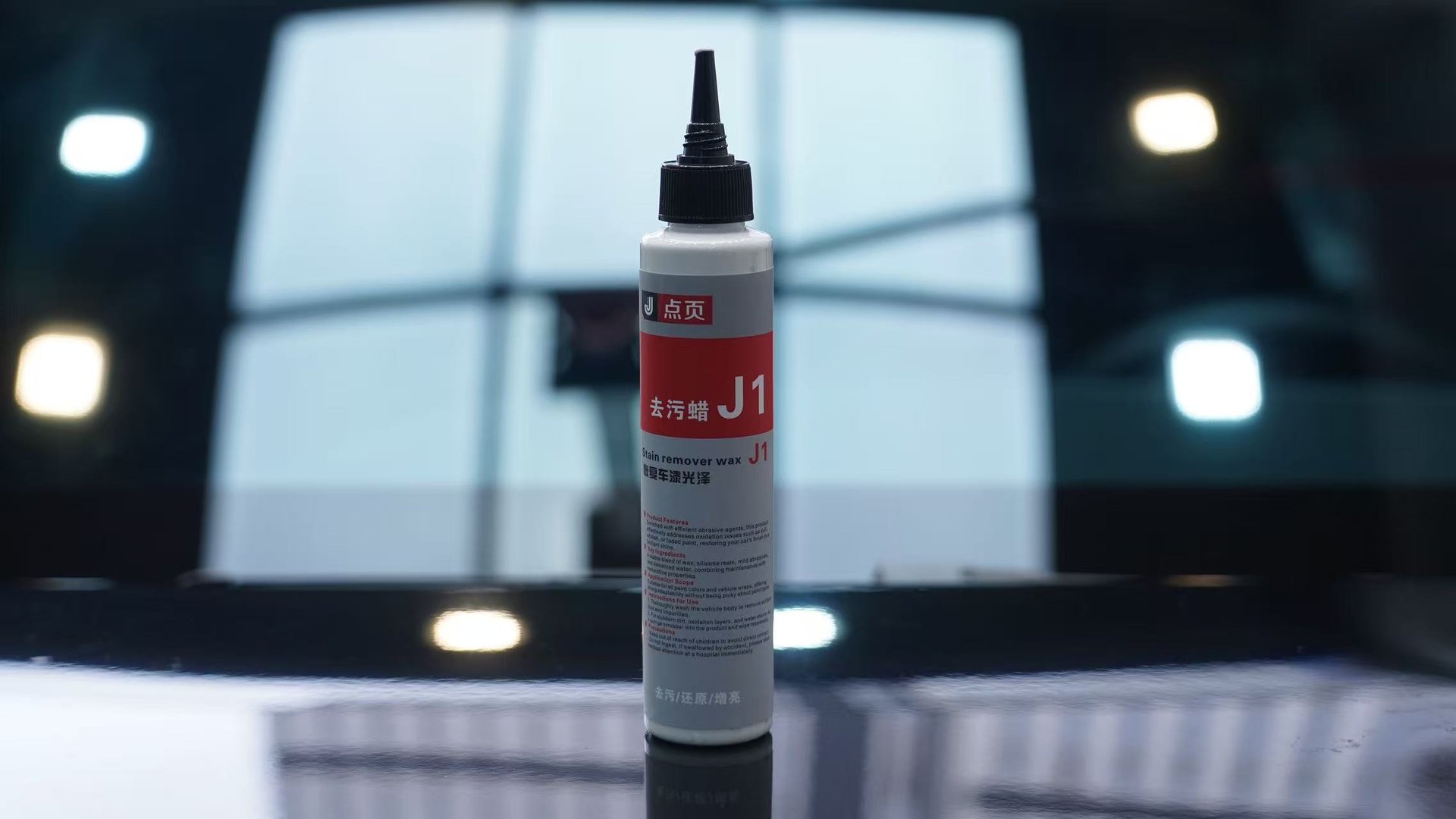 DianYe J1 Cleaning Wax — for light oxidation, apply and wipe directly to remove surface oxidation
Moderate oxidation: Obvious white spots and gray patches, localized gloss loss, surface develops a grainy texture with slight peeling. Micropore corrosion in the chromium is intensifying, but hasn”t broken through大面积. This requires chrome-specific polishing compound + hand polishing, with careful technique. Some improvement is possible.
Severe oxidation: Large areas turned black or gray, chrome layer is blistering and peeling, exposing underlying metal. The chromium has been fully penetrated and the nickel/copper layers are exposed. Nothing can polish this back — blistering and peeling mean the triple-layer structure has collapsed. Re-plating is the only option.
The key judgment: Has the chromium layer been penetrated? If scratches or corrosion have gone through the chromium to expose the nickel layer (yellowish color, loss of blue-white metallic luster), any polishing will only expand the damage area further.
6. How to Handle Light Oxidation Yourself
If your chrome trim has only light oxidation (foggy surface, still smooth to touch), here”s a process you can try:
Step 1: Clean
Wash the chrome surface thoroughly with pH-neutral car wash soap to remove dust, grease, and insect residue. Dry completely after washing. Never polish without cleaning first — particles will be ground into the chromium by the abrasive, causing secondary scratches.
Step 2: Remove Oxidation
Apply J1 Cleaning Wax (DianYe Cleaning Wax) onto a microfiber cloth. Wipe in one direction along the chrome strip — do NOT rub back and forth. Work on one small section at a time, applying moderate pressure for 45-90 seconds, then wipe away residue with a clean towel. J1 Cleaning Wax has gentle abrasive particles suitable for removing surface oxidation. Apply and wipe directly — no waiting required.
Step 3: Protect
Once the oxidation is removed, the newly exposed chrome surface is very vulnerable. You must apply protection within 24 hours, or it will re-oxidize quickly. Apply a thin coat of X1 Quick Liquid Wax (DianYe Quick Liquid Wax / protective wax) by hand. X1 is not a polishing wax — it”s a protective wax. Its function is to isolate moisture and air, delaying the next round of oxidation.
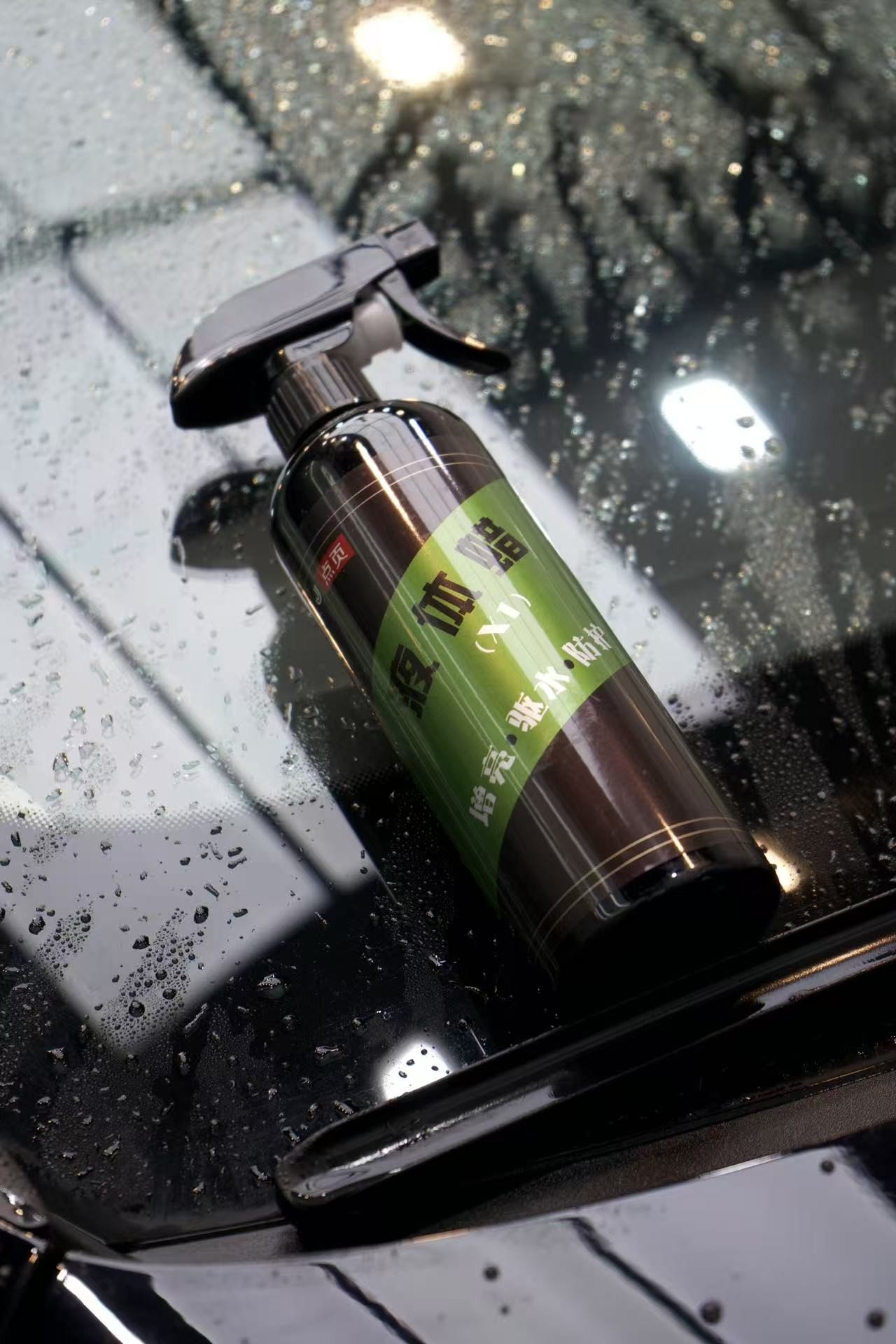 DianYe X1 Quick Liquid Wax — sealing protection after chrome trim polishing
Step 4: Regular Maintenance
After treating light oxidation, reapply protective wax every 2-3 months. Wash and dry your car the same day after rain exposure. Don”t let bird droppings or insect remains sit overnight.
7. The Fundamental Difference Between Chrome Polishing and Paint Polishing
Many people apply their car paint polishing experience to chrome trim — this is extremely dangerous. The safety margins are completely different:
| Comparison | Paint Polishing | Chrome Trim Polishing |
|---|---|---|
| Safe removal thickness | Clear coat 35-50μm, can safely remove 5-10μm | Chromium layer 0.5-5μm, removing 0.5μm risks breakthrough |
| Breakthrough consequence | Exposes primer, can be touch-up repaired | Exposes nickel/copper layer, cannot be self-repaired, requires re-plating |
| Repair cost | Tens to hundreds of yuan | Re-plating 300-800 yuan per piece |
The chromium layer is only 1/10 to 1/70 the thickness of the paint clear coat. You can polish paint confidently, but chrome trim demands extreme caution — one slightly heavy pass and the chromium is gone.
The core principle for chrome trim treatment: Only remove the oxidation layer, nothing more. The goal is restoring gloss, not “buffing out” scratches. If you”re looking for scratch elimination on chrome trim, it”s almost impossible to achieve safely.
8. Methods You Must NEVER Use on Chrome Trim
I”ve seen too many people destroy their chrome trim with wrong methods. Here are the most common mistakes:
❌ Toilet cleaner / strong acid iron removers: Directly dissolves passivation layer, causes large-area whitening ❌ RO rotary polishing machine: Concentrated local heat — chromium and nickel have different expansion coefficients, causing immediate delamination ❌ Wool polishing pads: Cutting force too aggressive, can grind through the chromium in minutes ❌ Coarse sandpaper (below 2000 grit): Scratches too deep to restore to mirror finish on chromium ❌ Ammonia-based household cleaners: Ammonia accelerates chromium oxidation over time ❌ Working in direct sunlight or on hot surfaces: Products dry too fast, increasing scratch risk
Remember: all chrome trim treatment follows “minimum intervention” — if hand work solves it, don”t use machines; if gentle products work, don”t use aggressive cutters.
9. Prevention Is 100x More Important Than Repair
Once chrome trim blisters and peels, repair costs are extremely high (re-plating 300-800 yuan per piece). But prevention costs are actually very low:
- Wash your car the same day after rain: Acid rain residue on chrome for over 24 hours causes irreversible damage
- Remove bird droppings and insect residue immediately: Don”t let them sit for more than a few hours
- Apply wax protection every 2-3 months: Use X1 Quick Liquid Wax in a thin coat to isolate moisture and air
- Use pH-neutral car wash soap: Don”t use acidic or alkaline products on your chrome trim
- Dry immediately after washing: Don”t let water spots air-dry — mineral deposits left on the chrome surface
- Avoid automatic car wash brush systems: Hard bristles create micro-scratches in the chromium that become new corrosion starting points
- Park carefully: Avoid prolonged parking under trees, near chemical plants, or by the ocean
Develop these habits and your chrome trim”s lifespan extends by years. Especially for those in coastal cities — salt spray is chrome trim”s number one enemy, and maintenance frequency should at least double.
Summary
The root cause of chrome trim whitening and blistering in one sentence: The copper-nickel-chromium triple-layer structure has been corroded through. The chromium layer is only 0.12-0.5μm, inherently has micropores, and once the passivation layer is destroyed by acidic substances, corrosive media rush in, the nickel oxidizes and expands, pushing the chromium up into blisters.
Can automotive polishing wax fix it? It depends on severity:
- Light oxidation (foggy surface) → J1 Cleaning Wax + hand wiping removes oxidation and restores gloss
- Moderate oxidation (white spots, grainy texture) → Chrome-specific polishing compound, careful hand application
- Severe oxidation (blistering, peeling) → Stop trying, go straight to re-plating
The iron rule for chrome trim: Only remove the oxidation layer, nothing more. The chromium layer is thin as a cicada”s wing — the cost of grinding through it far outweighs the cost of not grinding at all.
DianYe Technology J-Series Automotive Polishing Wax (J1 Cleaning Wax / J2 Coarse Polishing Wax / J3 Medium Polishing Wax / J5 Mirror Finish Restorer) + X1 Quick Liquid Wax, covering the complete process from cleaning and oxidation removal to sealing protection. For more chrome trim care and polishing knowledge, search “DianYe Technology” to visit the official website.