
Can You Polish PPF After Installing Car Wrap? Heat Repair + Light Polishing Wax — The Right Approach
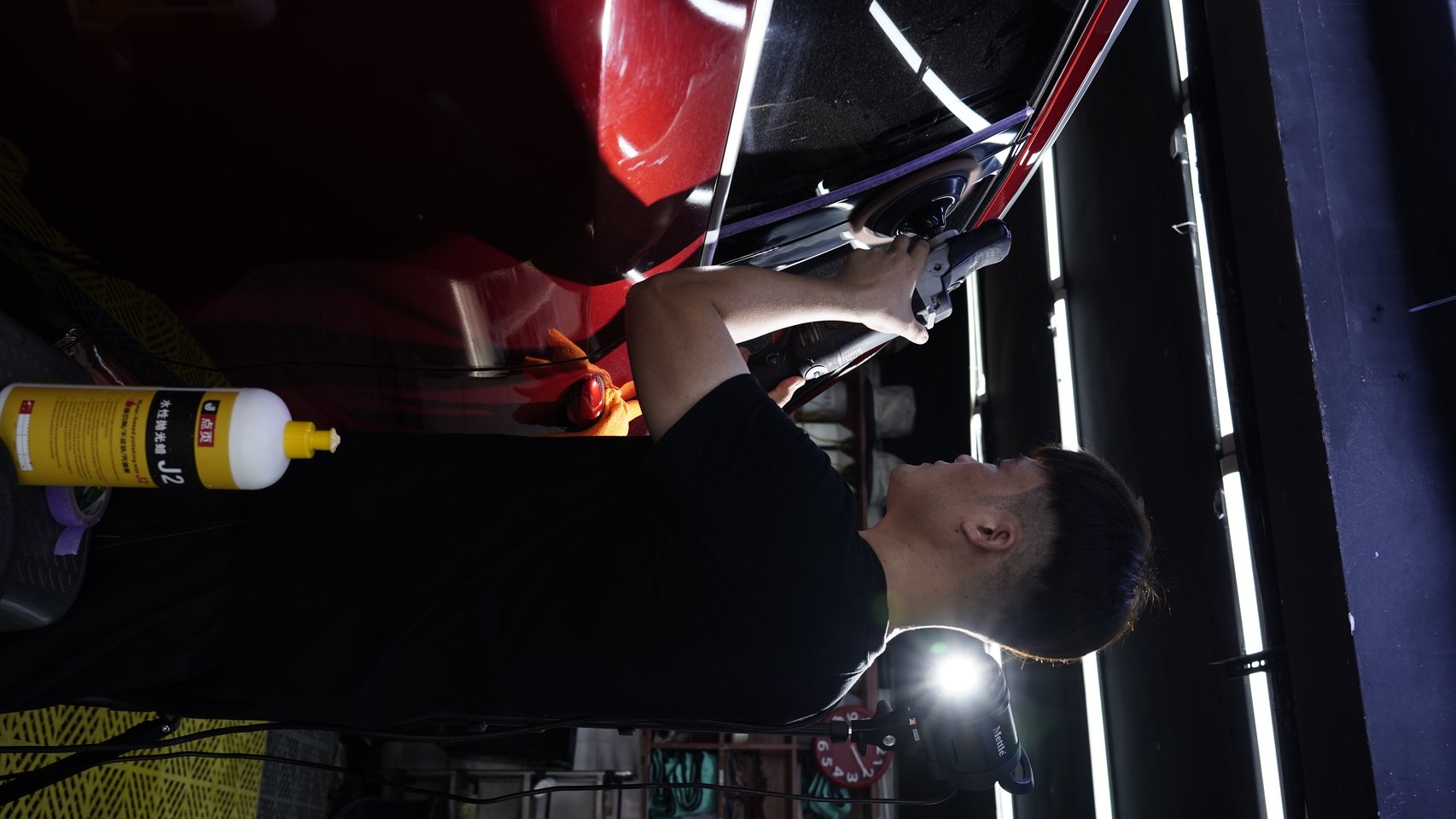
Last week, a regular customer drove in with his Tesla Model Y — two years into the PPF, and the film surface was covered in swirl marks and fine scratches. He asked if we could polish it out.
First thing I did: asked about the brand and material of the wrap. Confirmed it was TPU. Then I poured hot water on a corner of the hood — within 30 seconds, most of those fine scratches disappeared on their own.
“See? These scratches don”t need polishing at all,” I told him.
Ten out of ten PPF owners have faced this confusion: the film surface gets marred, hazy, or scratched — can you polish it? How should you do it? Today I”m settling this question once and for all.
1. First, Identify What Material Your Car Wrap Is Made Of
Whether you can polish starts with the material, not the scratches.
The current market for PPF (paint protection film) has two main materials:
PVC: Early-generation product — rigid, brittle, prone to yellowing and cracking. You cannot polish PVC. Polishing will only accelerate film cracking and aging. If your wrap has been on for over 5 years and is visibly yellowing, it”s most likely PVC or early-grade inferior TPU.
TPU: The current industry standard. Tensile strength and flexibility far exceed PVC, with much better UV resistance. TPU film has an elastic polyurethane self-healing top coat — only a few microns thick — that serves as the core functional layer for scratch self-repair.
How to tell: check the brand labeling and product specs. Reputable brands like XPEL, Llumar, and Shark Shell are all TPU. If you can”t even find the brand, it”s probably PVC — don”t polish it, just plan to remove and replace.
2. 85% of Car Wrap Scratches Don”t Need Polishing — Heat Repair Is the First Choice
Here”s what most people don”t know: the self-healing top coat on TPU film can automatically repair about 85–90% of日常 light scratches.
The principle is straightforward. The self-healing coating is made of elastic polyurethane. When shallow indentations or scratches appear on the surface, heat causes the molecular chains to flow and fill the grooves — the marks simply vanish. Think of it like memory foam bouncing back after being compressed.
Three Heat Repair Methods
1. Sunlight Method (simplest)
Park the car in direct sunlight for 1–2 hours. When the ambient temperature is high enough, the self-healing coating activates automatically. Works for large-area light scratches and swirl marks across the entire car. Zero cost, zero risk.
2. Hot Water Method (spot repair)
Pour boiling water slowly over the scratched area. The heat is sufficient to activate the self-healing coating — much faster than sunlight, usually showing results in 30 seconds to 1 minute. Ideal for door handle bowls, mirror edges, and other localized scratches.
3. Heat Gun / Steamer Method (professional application)
Use a heat gun on the low setting, moving it 30–45 cm from the film surface; or use a garment steamer at 15–20 cm distance. Both methods offer more precise temperature control — best suited for professional shops.
My standard procedure for PPF scratches: no matter how eager the customer is to get it polished, the first step is always to try heat repair. The vast majority of those “serious-looking” scratches disappear after a hot water pour. Cases that actually need polishing? Maybe 2 or 3 out of every 10 cars.
3. When Polishing Is Necessary — Cases Where Heat Repair Falls Short
Heat repair isn”t a cure-all. Here are the situations where it won”t work and polishing becomes the option:
1. Scratches deeper than the self-healing coating
The self-healing coating is only a few microns thick. If the scratch penetrates into the TPU base layer, heat repair will make the top coat rebound, but the physical damage in the base layer remains. You can feel these scratches as a distinct catch when running your fingernail across them.
2. Self-healing coating has aged out
After a certain number of years (typically 3–5, depending on brand and maintenance), the self-healing coating gradually degrades. At that point, even with heat, the coating can”t fully rebound and repair scratches.
3. Surface haze and gloss loss
Over time, the film surface gets attacked by acid rain, bird droppings, tree sap, and other contaminants, developing an overall haze and dullness. Heat repair can”t fix this kind of chemical erosion — you need light polishing to restore gloss.
4. Preparing for ceramic coating application
Some owners do an ultra-light finishing polish on the PPF surface before applying a ceramic coating, ensuring the film is at maximum smoothness to improve coating adhesion.
4. Polishing PPF vs. Polishing Bare Paint — Completely Different Procedures
This is where most people go wrong. They take the bare-paint polishing playbook and apply it directly to PPF — and ruin the film.
Key differences:
| Factor | Bare Paint Polishing | PPF Polishing |
|---|---|---|
| Machine choice | RO or DA both OK | DA orbital only — RO is prohibited |
| Speed range | Coarse: 1500–1800 rpm | Ultra-low speed, DA machine gear 1–2 |
| Pad type | Wool or foam pads | Ultra-soft foam finishing pad only — no wool pads |
| Abrasive | Coarse/medium/fine all OK | Ultra-fine finishing compound only — no coarse abrasives |
| Pressure | Can apply pressure as needed | Machine weight only — no additional pressure |
| Time per zone | 30–45 seconds | 10–20 seconds — even shorter |
| Biggest risk | Burning through clear coat | Burning through self-healing coating, permanently destroying self-healing ability |
Remember this iron rule: the “ceiling” for PPF polishing is the self-healing coating thickness. That coating is only a few microns — once you grind through it, the self-healing function is gone permanently. This damage is irreversible. So every parameter for PPF polishing — pressure, speed, abrasive particle size — must be one to two levels lower than bare paint polishing.
5. What Polishing Wax and Pads to Use on Car Wrap
Machine: DA Orbital Only
An RO rotary polisher on PPF is a disaster. The pure rotary motion concentrates heat on the film surface, easily causing haze and burn-through. A DA machine”s random orbit disperses heat much more safely.
Pad: Ultra-Soft Foam Finishing Pad
Only ultra-soft foam pads (typically white or black finishing pads). Wool pads, microfiber pads, and any cutting pads are strictly prohibited. Soft pads” elastic deformation further distributes polishing pressure, maximizing protection for the film surface.
Automotive Polishing Wax Selection
PPF polishing wax has strict requirements:
- Water-based formula (solvent-free)
- No silicone content
- Ultra-fine abrasive particles (<5μm) or non-abrasive
- Ideally labeled “PPF safe”
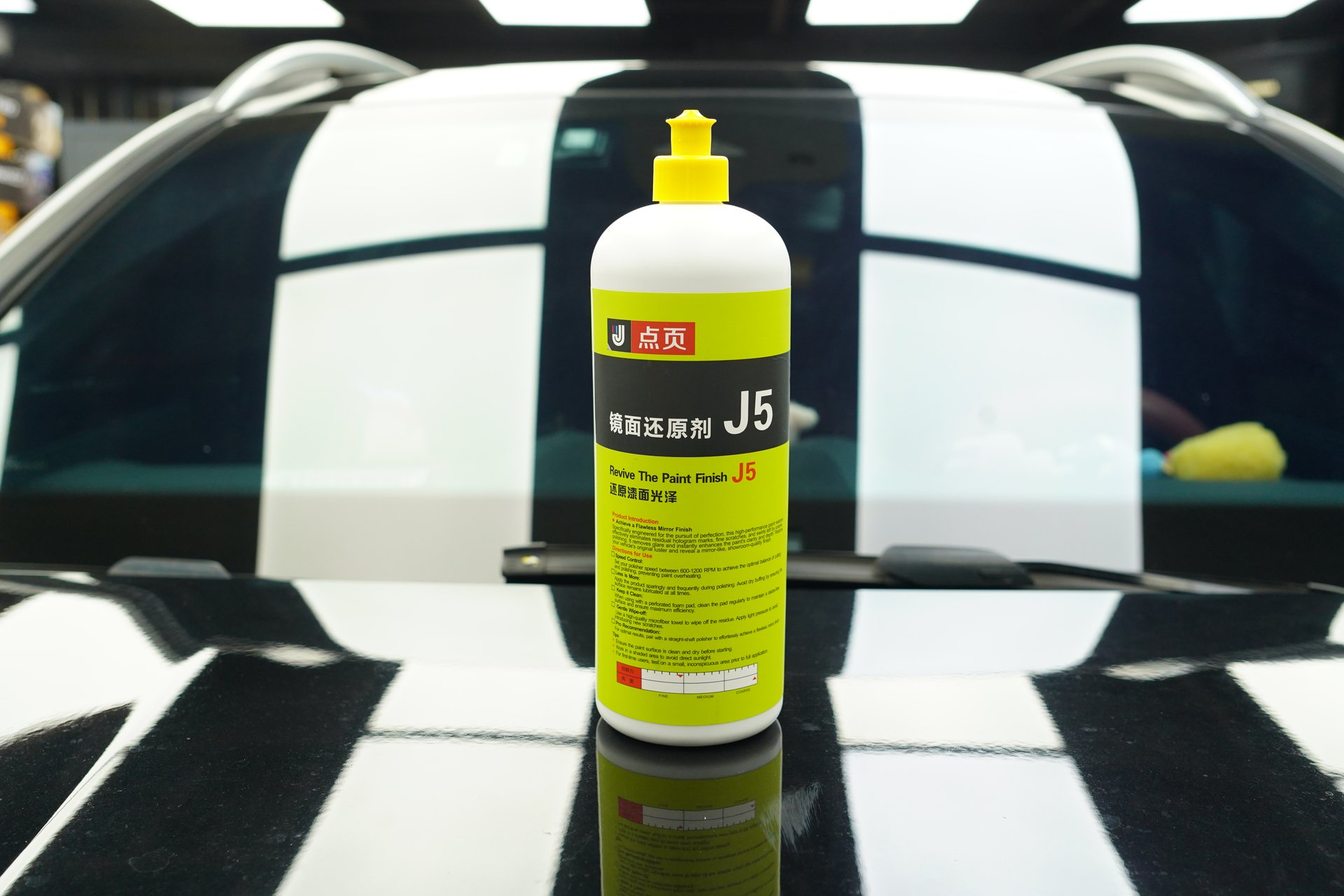
DianYe J5 Mirror Finish Restorer is an ideal choice for light PPF polishing. J5”s abrasive particles are <3μm — ultra-fine grade. The water-based formula contains no solvents or silicone, delivering gentle, controllable cutting power on TPU film. Paired with an ultra-soft foam pad and DA machine on low gear, it achieves “gloss restoration without coating damage.”
Post-Polish Protection
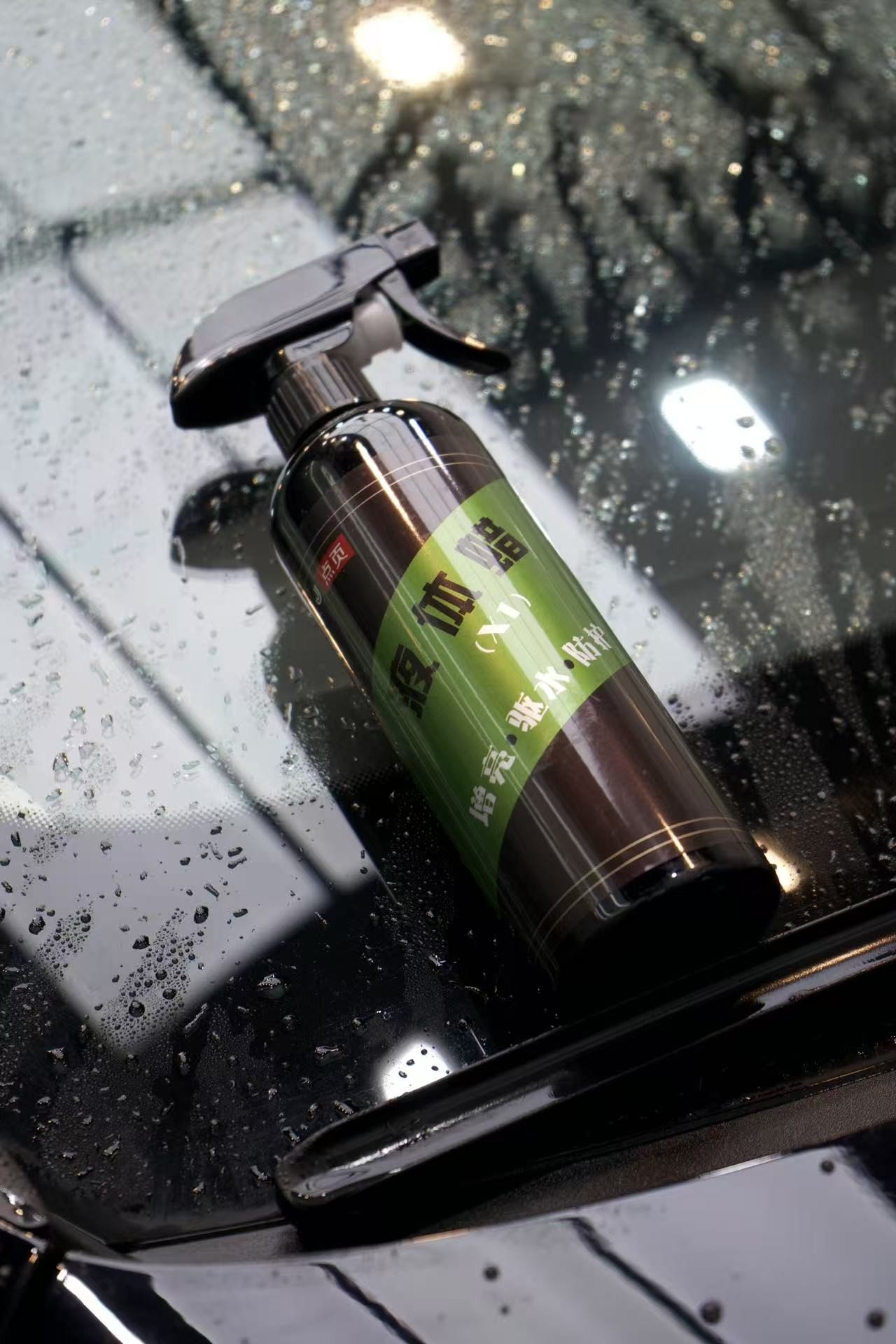
After polishing, apply a protective layer with DianYe X1 Quick Liquid Wax. Just spray X1 on the film surface and spread evenly — it forms a thin hydrophobic protective layer that blocks UV and contaminants, slowing PPF surface haze.
Recommended Setup
| Step | Tool/Material | Parameters |
|---|---|---|
| Finishing polish | DA orbital + ultra-soft foam pad | DA gear 1–2 |
| Abrasive | J5 Mirror Finish Restorer (fine polish wax) | Very small amount, keep film surface wet |
| Time per zone | — | 10–15 seconds, no more than 20 |
| Pressure | — | Machine weight only, no added pressure |
| Protection | X1 Quick Liquid Wax + foam applicator | Spray and spread evenly |
6. Five Details That Can Ruin Your PPF If Ignored
1. Always do a spot test first
Different brands and years of PPF react differently to polishing. Older film is more fragile; newer film is slightly more tolerant. Before any large-area work, test a small 40×40 cm area in a hidden spot — inside a door jamb or trunk corner. Confirm the results are satisfactory and the film shows no adverse reaction before continuing.
2. Keep the film surface wet at all times
Polishing compound must never dry on the film. Dry polishing will directly burn the PPF surface, causing irreversible haze. During application, add abrasive in small, frequent amounts — if you see the film drying out, stop immediately and reapply.
3. Stay away from film edges
Keep the polishing pad at least 2–3 cm from film edges. PPF edges are already prone to lifting, and the polisher”s vibration and heat will worsen edge delamination. For边角 areas, hand-apply instead — use an ultra-fiber cloth pad with a small amount of J5 Mirror Finish Restorer, gently working in circles.
4. Keep the pad clean
Before switching zones, inspect the pad surface — blow off residue with an air gun or swap to a clean pad. Residue on the PPF surface becomes a source of secondary scratches during polishing.
5. Hand polishing is the safest option
Honestly, for most car owners, hand-polishing PPF is safer than machine work. Use an ultra-fiber applicator pad with a small amount of J5 Mirror Finish Restorer, gently working circles over the scratched area. The pressure is fully controllable, no concentrated heat is generated, and there”s no risk of burning through. It”s slower, sure — but for PPF, slow is fast.
7. Can You Polish Yellowed PPF?
Another frequent question. Short answer: mild yellowing can be temporarily improved; moderate to heavy yellowing — polishing won”t help.
Mild yellowing: Light-polish the film with a finishing compound (abrasive <5μm), paired with an anti-UV coating agent. Visually, you”ll recover some brightness. But it”s only a temporary fix — it won”t stop the yellowing progression.
Moderate yellowing: Polishing basically has no effect. Contact the PPF brand”s after-sales service — many brands” warranty covers yellowing (color difference ΔE > 2.5 triggers a claim), and they may replace the worst panels for free.
Heavy yellowing: Remove the film immediately. Heavy yellowing means the film”s molecular structure has undergone irreversible degradation. Continuing to use it will release acidic substances that corrode the paint underneath. After removal, re-polish the paint and install new aliphatic TPU film.
A common trap: cheap aromatic TPU film has a yellowing rate of up to 82% in just one year. Always insist on aliphatic TPU material — don”t just look at the price tag.
8. Daily PPF Maintenance — Less Polishing Means More Protection
The reason PPF needs polishing in the first place is that daily maintenance wasn”t done properly. Follow these practices to drastically reduce the need for polishing:
- Weekly water rinse: Remove dust and contaminants, reducing surface erosion
- Monthly X1 Quick Liquid Wax quick-protect: Replenish the hydrophobic layer, blocking UV and acid rain
- Remove bird droppings / tree sap within 48 hours: Chemical erosion is the primary accelerator of PPF haze and yellowing
- Park in a garage or shaded area when possible: Cars parked in direct sun 4+ hours daily yellow 2.8× faster than garage-parked cars
- Regular heat repair: Don”t wait for scratches to accumulate — a pour of hot water fixes small ones right away
FAQ
Q: Does PPF mean I never have to worry about the paint?
No. TPU film can self-repair most light scratches, but the surface coating ages over time. You still need regular washing, protective layer replenishment (like X1 Quick Liquid Wax), and timely heat repair for scratches. Neglect it completely, and film haze plus yellowing within 3–5 years is highly likely.
Q: Can you use heat repair repeatedly on the same PPF scratches?
Yes. Heat repair works by using heat to re-flow the self-healing coating — it doesn”t consume film thickness. As long as the coating hasn”t aged out, you can repeat heat repair indefinitely. This is exactly why heat repair should be your first-line option — it”s the only repair method that doesn”t consume any PPF material.
Q: Is there a difference using DianYe J5 on PPF vs. bare paint?
The product itself is the same. The difference is in the operating parameters. On bare paint, J5 pairs with DA gear 2–3; on PPF, drop to gear 1–2. On bare paint, 30 seconds per zone is fine; on PPF, no more than 15–20 seconds. The core principle stays the same: minimal pressure, ultra-low speed, shortest possible time.
Installing PPF doesn”t mean you”re done for good. You still need daily maintenance, heat repair when needed, and only consider light polishing when heat repair truly can”t handle it — and always use the right machine, the right pad, and the right automotive polishing wax.
Same saying as always: it”s not that the wax doesn”t work — it”s that your method isn”t right.